- Why Good Nutrition Matters
- Nutrition for Beginners: Understanding the Basics
- 1. Carbohydrates
- 2. Protein
- 3. Healthy Fats
- 4. Vitamins and Minerals
- 5. Water
- Build a Balanced Plate
- Nutrition for Beginners: Foods to Eat More Often
- Foods to Limit Without Feeling Restricted
- Simple Healthy Eating Habits for Beginners
- Eat Regular Meals
- Include Protein in Every Meal
- Choose Whole Foods More Often
- Read Labels Carefully
- Plan Ahead
- Common Mistakes Beginners Make
- Trying Extreme Diets
- Fearing All Carbs or All Fats
- Expecting Instant Results
- Ignoring Portion Sizes
- A Sample Day of Healthy Eating
- Make Progress, Not Perfection
- Final Thoughts
Nutrition for Beginners: Must-Have Guide for Healthy Eating
Nutrition for beginners can feel confusing at first, especially with so much advice online about what to eat, what to avoid, and which diet is best. The good news is that healthy eating does not need to be complicated. Once you understand a few basic principles, it becomes much easier to make smart food choices, build balanced meals, and create habits that support your energy, mood, and overall health.
Whether your goal is to feel better, improve your diet, manage your weight, or simply learn the basics, this guide will help you build a strong foundation.
Why Good Nutrition Matters
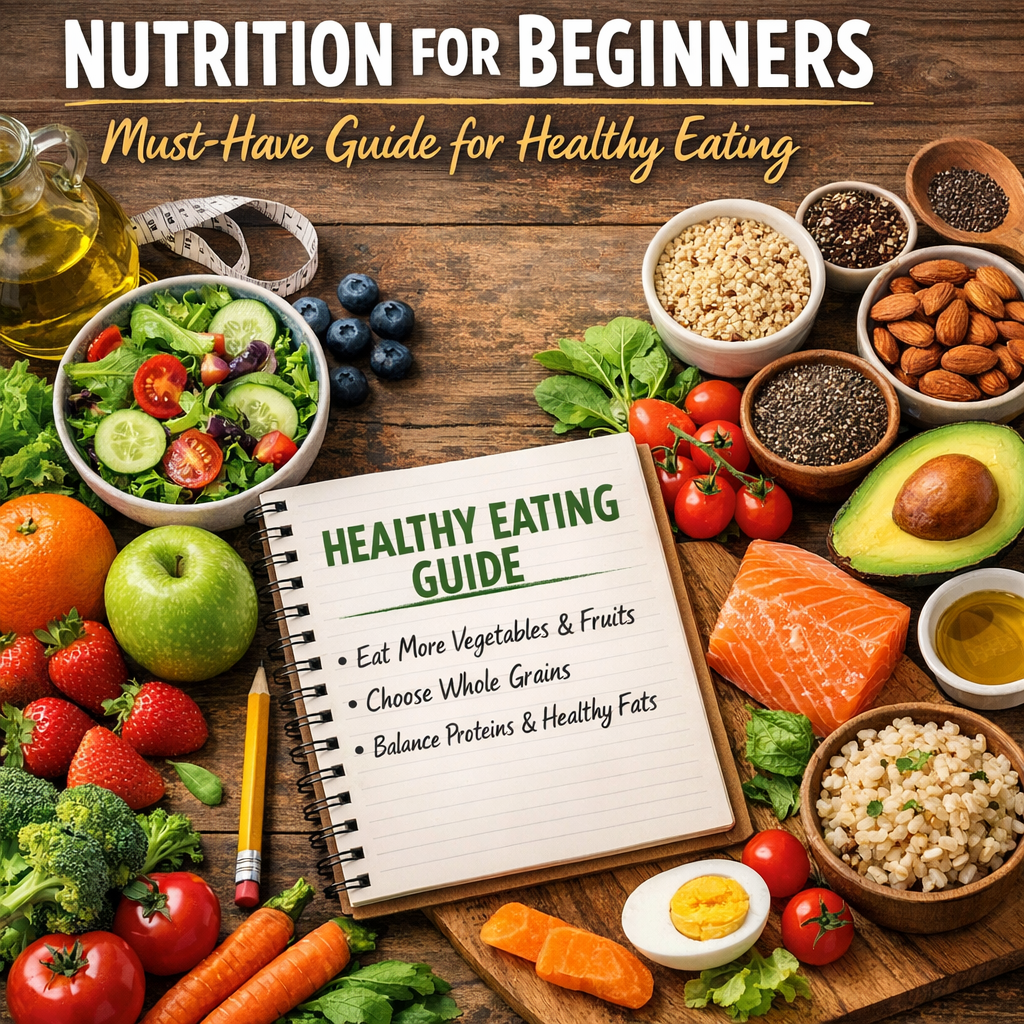
What you eat affects nearly every part of your life. Food gives your body the fuel it needs to function properly, from keeping your brain focused to supporting your immune system and helping your muscles recover. A balanced diet can also lower the risk of long-term health issues such as heart disease, type 2 diabetes, and high blood pressure.
Healthy eating is not about perfection. It is about consistency. Small improvements in your daily meals can make a big difference over time.
Nutrition for Beginners: Understanding the Basics
Before worrying about meal plans or cutting out foods, it helps to understand the main nutrients your body needs.
1. Carbohydrates
Carbohydrates are your body’s main source of energy. They are found in foods like rice, oats, bread, pasta, fruit, beans, and vegetables.
Not all carbs are equal. Complex carbohydrates such as whole grains, sweet potatoes, and legumes provide fiber and keep you full longer. Simple carbs, especially highly processed sugary foods, can lead to quick energy spikes and crashes.
2. Protein
Protein helps build and repair muscles, skin, and other body tissues. It also helps you stay full after meals.
Good protein sources include:
– Chicken
– Fish
– Eggs
– Greek yogurt
– Tofu
– Lentils
– Beans
– Nuts and seeds
3. Healthy Fats
Fats are important for hormone production, brain health, and absorbing certain vitamins. Healthy fats should be part of a balanced diet.
Some great sources are:
– Avocados
– Olive oil
– Nuts
– Seeds
– Salmon
– Nut butters
4. Vitamins and Minerals
These nutrients help your body perform essential functions like maintaining strong bones, supporting immunity, and producing energy. Eating a variety of colorful fruits and vegetables is one of the best ways to get a wide range of vitamins and minerals.
5. Water
Hydration is often overlooked, but it is a key part of healthy eating. Water helps regulate body temperature, supports digestion, and keeps your body functioning well. Try drinking water throughout the day, especially if you are active.
Build a Balanced Plate
One of the easiest ways to eat healthier is to focus on balance instead of restriction. A simple plate method can help:
– Half your plate: vegetables and fruit
– One quarter: lean protein
– One quarter: whole grains or healthy carbohydrates
– Add a small portion: healthy fats
For example, a balanced lunch might include grilled chicken, brown rice, roasted vegetables, and a drizzle of olive oil. This kind of meal provides protein, fiber, vitamins, and long-lasting energy.
Nutrition for Beginners: Foods to Eat More Often
You do not need fancy superfoods to eat well. Many simple, affordable foods offer excellent nutrition.
Try including more of these in your meals:
– Leafy greens like spinach and kale
– Berries, apples, oranges, and bananas
– Oats and brown rice
– Eggs
– Yogurt
– Beans and lentils
– Chicken, turkey, and fish
– Sweet potatoes
– Nuts and seeds
– Water and unsweetened beverages
The goal is variety. Eating different foods helps ensure you get a broad range of nutrients.
Foods to Limit Without Feeling Restricted
Healthy eating does not mean you can never enjoy your favorite treats. It simply means being mindful of foods that offer a lot of calories, sugar, salt, or unhealthy fats without much nutritional value.
Try limiting:
– Sugary drinks
– Packaged snacks high in salt
– Fried foods
– Candy and desserts in large amounts
– Highly processed fast food
Instead of cutting these out completely, focus on moderation. For example, you can enjoy dessert occasionally while still maintaining healthy habits overall.
Simple Healthy Eating Habits for Beginners
Starting small is often more effective than trying to change everything at once. Here are some practical habits that make nutrition easier:
Eat Regular Meals
Skipping meals can lead to low energy and overeating later. Try to eat consistent meals and snacks throughout the day.
Include Protein in Every Meal
Adding protein helps you stay full and supports muscle health. Even simple options like eggs, yogurt, or beans can make a big difference.
Choose Whole Foods More Often
Whole foods are foods that are less processed and closer to their natural state. Examples include fruits, vegetables, oats, eggs, and fresh meats.
Read Labels Carefully
Nutrition labels can help you compare products. Look at serving size, added sugar, sodium, protein, and fiber rather than just calories alone.
Plan Ahead
Having healthy ingredients at home makes good choices easier. Keep simple options on hand such as frozen vegetables, canned beans, eggs, oats, rice, and fresh fruit.
Common Mistakes Beginners Make
When learning about nutrition, many people fall into the same traps. Being aware of them can save you time and frustration.
Trying Extreme Diets
Very restrictive diets may give quick results, but they are often hard to maintain. A balanced approach is more realistic and sustainable.
Fearing All Carbs or All Fats
Your body needs both carbohydrates and fats. The key is choosing better sources and appropriate portions.
Expecting Instant Results
Healthy eating works best over time. Better energy, improved digestion, and long-term health benefits come from consistent habits, not overnight changes.
Ignoring Portion Sizes
Even nutritious foods can be overeaten. Paying attention to hunger and fullness can help you eat the right amount for your body.
A Sample Day of Healthy Eating
If you are unsure how to put everything together, here is a simple example:
Breakfast: Oatmeal with berries, banana slices, and a spoonful of peanut butter
Lunch: Grilled chicken, brown rice, and mixed vegetables
Snack: Greek yogurt with nuts
Dinner: Baked salmon, sweet potato, and steamed broccoli
Hydration: Water throughout the day
This type of routine includes protein, fiber, healthy fats, and a variety of vitamins and minerals.
Make Progress, Not Perfection
One of the most important things to remember is that healthy eating is a long-term habit, not a short-term challenge. You do not need to eat perfectly to improve your nutrition. Start with one or two changes, such as drinking more water, eating vegetables with dinner, or choosing whole grains more often.
Over time, those small changes become part of your lifestyle.
Final Thoughts
Learning how to eat well does not require complicated rules. Once you understand the basics of balanced meals, nutrient-rich foods, and consistent habits, healthy eating becomes much more manageable. Focus on simple meals, gradual improvements, and foods that help you feel your best.
If you are just getting started, keep it simple: eat more whole foods, include protein and vegetables regularly, stay hydrated, and give yourself time to build better habits. That steady approach is what leads to lasting results.