- Why Healthy Eating Habits Matter More Than Ever
- Healthy Diet Tips for 2026: 10 Habits to Start Now
- 1. Build Every Meal Around Whole Foods
- 2. Prioritize Protein at Breakfast
- 3. Eat More Fiber Every Day
- 4. Stay Hydrated Before You Feel Thirsty
- 5. Practice Smarter Portion Awareness
- 6. Plan Meals Before You Get Too Hungry
- Healthy Diet Tips That Make Snacking Better
- 7. Choose Balanced Snacks Instead of Empty Calories
- 8. Cut Back on Added Sugar Without Cutting Joy
- 9. Make Vegetables Easy and Appealing
- 10. Be Consistent, Not Perfect
- Simple Ways to Make These Habits Stick
- Final Thoughts
Healthy Diet Tips: 10 Must-Have Best Habits for 2026
Healthy diet tips can make a huge difference in how you feel, think, and function every day. In 2026, eating well is no longer just about cutting calories or following short-term trends. It is about building simple, sustainable habits that support energy, mood, immunity, and long-term health. With busy schedules, endless food choices, and constant nutrition advice online, the smartest approach is to focus on practical habits you can actually maintain.
This guide breaks down 10 essential habits that can help you create a healthier relationship with food and make better daily choices without feeling overwhelmed.
Why Healthy Eating Habits Matter More Than Ever
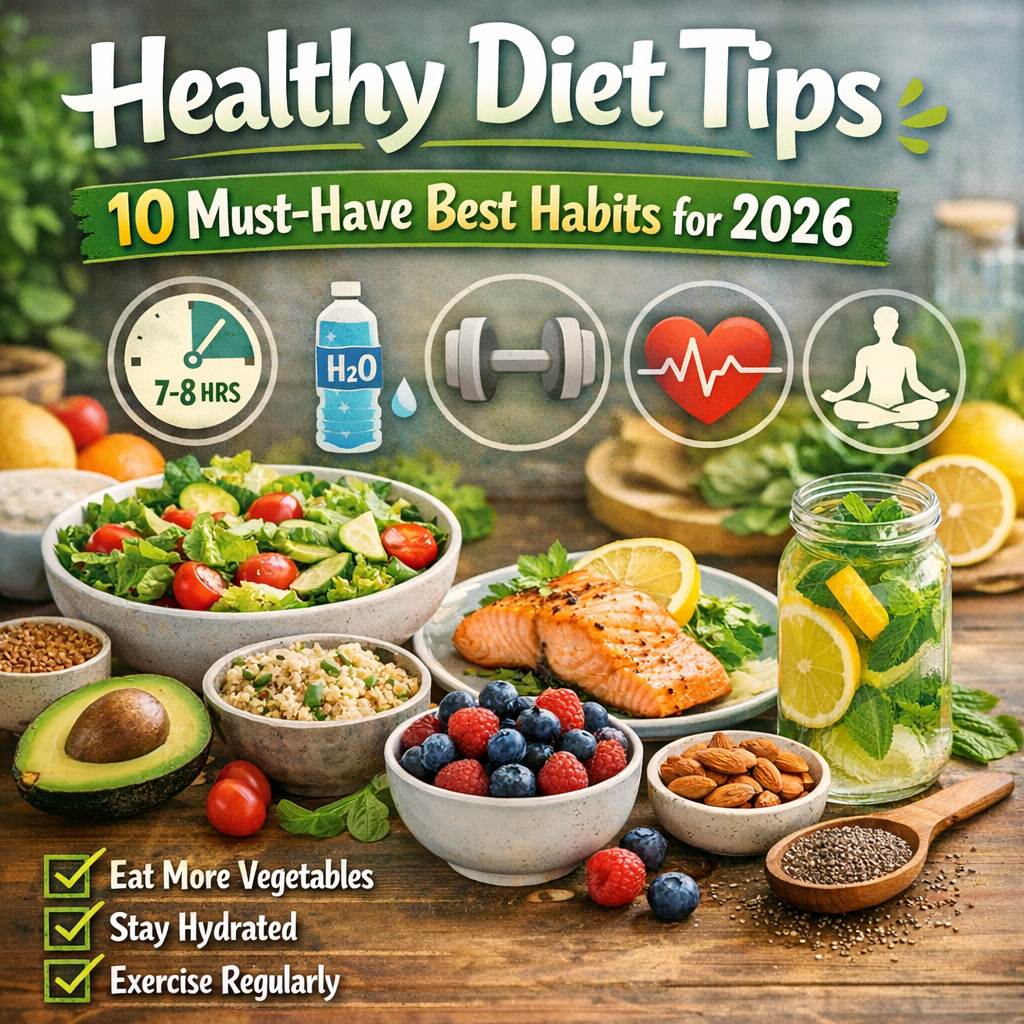
Nutrition has become more personalized and practical in recent years. People are moving away from extreme diets and looking for realistic ways to eat better. A balanced eating pattern can help support heart health, digestion, brain function, sleep quality, and weight management. Even small changes, when repeated consistently, can have a powerful impact over time.
The goal is not perfection. The goal is progress through habits that fit your lifestyle.
Healthy Diet Tips for 2026: 10 Habits to Start Now
1. Build Every Meal Around Whole Foods
One of the best habits you can develop is choosing more whole, minimally processed foods. This includes vegetables, fruits, whole grains, legumes, nuts, seeds, eggs, fish, and lean proteins. These foods naturally provide fiber, vitamins, minerals, and antioxidants your body needs.
A simple way to apply this habit is to ask yourself: “Can I recognize most of the ingredients on my plate?” If the answer is yes, you are likely making a solid choice.
2. Prioritize Protein at Breakfast
Many people start the day with meals that are high in sugar and low in staying power. That often leads to hunger, cravings, and an energy crash later in the morning. Adding protein to breakfast can help you feel full longer and support better focus.
Good breakfast protein options include:
– Greek yogurt
– Eggs
– Cottage cheese
– Tofu
– Protein smoothies
– Nut butter with whole grain toast
Pairing protein with fiber, such as fruit or oats, makes the meal even more balanced.
3. Eat More Fiber Every Day
Fiber is one of the most overlooked parts of a healthy diet. It supports digestion, helps control blood sugar, promotes fullness, and may lower the risk of several chronic diseases. Yet many people still do not get enough.
Aim to include fiber-rich foods in every meal:
– Oats
– Beans and lentils
– Vegetables
– Berries
– Chia seeds
– Brown rice
– Whole grain bread
Instead of making dramatic changes, increase fiber gradually and drink enough water to help your body adjust.
4. Stay Hydrated Before You Feel Thirsty
Hydration plays a major role in overall health, but it is easy to ignore when life gets busy. Low fluid intake can affect energy, concentration, digestion, and even appetite regulation.
Keep water visible and accessible throughout the day. You can also improve hydration by eating water-rich foods like cucumbers, oranges, watermelon, and lettuce. If plain water feels boring, try adding lemon, mint, or berries for flavor.
5. Practice Smarter Portion Awareness
Healthy eating is not only about what you eat, but also how much. Portion awareness helps you avoid both overeating and undereating. This does not mean obsessively measuring everything. It means learning to notice hunger, fullness, and serving sizes.
Some practical tips include:
– Use smaller plates for meals if needed
– Serve food in the kitchen instead of eating from large containers
– Pause halfway through meals to check if you are still hungry
– Eat slowly enough to notice when you feel satisfied
Mindful eating often improves portion control naturally.
6. Plan Meals Before You Get Too Hungry
When you wait until you are starving to decide what to eat, convenience often wins over nutrition. Meal planning does not have to be complicated. Even a basic outline for the week can help you make healthier decisions.
Try planning:
– 3 go-to breakfasts
– 3 easy lunches
– 4 simple dinners
– A few balanced snacks
Having ingredients ready in advance can reduce stress and cut down on last-minute takeout or processed snack choices.
Healthy Diet Tips That Make Snacking Better
7. Choose Balanced Snacks Instead of Empty Calories
Snacking is not a problem by itself. In fact, it can help maintain steady energy levels if done well. The key is choosing snacks that combine protein, healthy fats, or fiber instead of relying on highly processed foods.
Better snack ideas include:
– Apple slices with peanut butter
– Hummus with carrots
– Boiled eggs
– A handful of nuts
– Greek yogurt with berries
– Whole grain crackers with cheese
Balanced snacks help curb cravings and support better choices at your next meal.
8. Cut Back on Added Sugar Without Cutting Joy
You do not have to completely eliminate sweets to eat well. However, being mindful of added sugar can improve energy levels, dental health, and weight management. Sugary drinks, packaged treats, sauces, and breakfast cereals can add up quickly.
A more realistic approach is to:
– Drink fewer sugary beverages
– Choose plain yogurt and sweeten it with fruit
– Read labels on packaged foods
– Save desserts for times you will truly enjoy them
This habit is about moderation, not restriction.
9. Make Vegetables Easy and Appealing
Many people know they should eat more vegetables, but the challenge is making them convenient and enjoyable. Instead of forcing yourself to eat bland salads every day, find preparation methods you actually like.
Try:
– Roasting vegetables with olive oil and herbs
– Adding spinach to smoothies
– Mixing extra vegetables into pasta, soups, or omelets
– Keeping chopped vegetables ready for quick meals
– Using frozen vegetables for convenience
The easier vegetables are to prepare, the more often you will eat them.
10. Be Consistent, Not Perfect
This may be the most important habit of all. A healthy diet is built over time, not in one ideal day of eating. Everyone has meals that are less balanced, social events that involve indulgence, and days when convenience comes first. That is normal.
What matters most is returning to your good habits consistently. If most of your meals support your health, occasional treats or off-days will not undo your progress. A flexible mindset is what makes healthy eating sustainable for the long term.
Simple Ways to Make These Habits Stick
The best habits are the ones that fit naturally into your routine. To make these changes last in 2026, start small. Pick two or three habits first rather than trying to change everything at once.
Here are a few ways to stay on track:
– Keep healthy staples at home
– Prep ingredients, not just full meals
– Set reminders to drink water
– Create a grocery list before shopping
– Track habits weekly instead of aiming for daily perfection
Success often comes from repetition, not intensity.
Final Thoughts
Good nutrition does not need to be complicated. The most effective approach is to build habits that are simple, realistic, and repeatable. From eating more whole foods to planning meals and improving hydration, each small step adds up. In 2026, healthy eating is less about strict rules and more about making thoughtful choices that support your lifestyle and well-being.
Start with one habit, practice it consistently, and build from there. Over time, those small actions can create lasting results for your health, energy, and confidence.