- Why Healthy Eating Tips Matter for Everyday Wellness
- 1. Start Your Day with a Balanced Breakfast
- 2. Fill Half Your Plate with Fruits and Vegetables
- 3. Choose Whole Grains More Often
- 4. Make Protein Part of Every Meal
- 5. Stay Hydrated Throughout the Day
- 6. Practice Mindful Eating
- 7. Limit Ultra-Processed Foods Without Being Extreme
- 8. Plan Meals and Snacks Ahead
- 9. Allow Flexibility and Build Consistency
- Healthy Eating Tips for Long-Term Success
- Final Thoughts
Healthy Eating Tips: 9 Must-Have Best Habits for Wellness
Healthy eating tips can make a powerful difference in how you feel each day, from your energy levels and mood to digestion, immunity, and long-term health. The good news is that eating well does not require a strict diet or complicated meal plans. In most cases, lasting wellness comes from simple habits practiced consistently. By making smarter choices one step at a time, you can build a balanced lifestyle that feels realistic and enjoyable.
A healthy approach to food is not about perfection. It is about learning how to nourish your body, listen to hunger cues, and create routines that support your overall well-being. Below are nine essential habits that can help you eat better and feel better.
Why Healthy Eating Tips Matter for Everyday Wellness
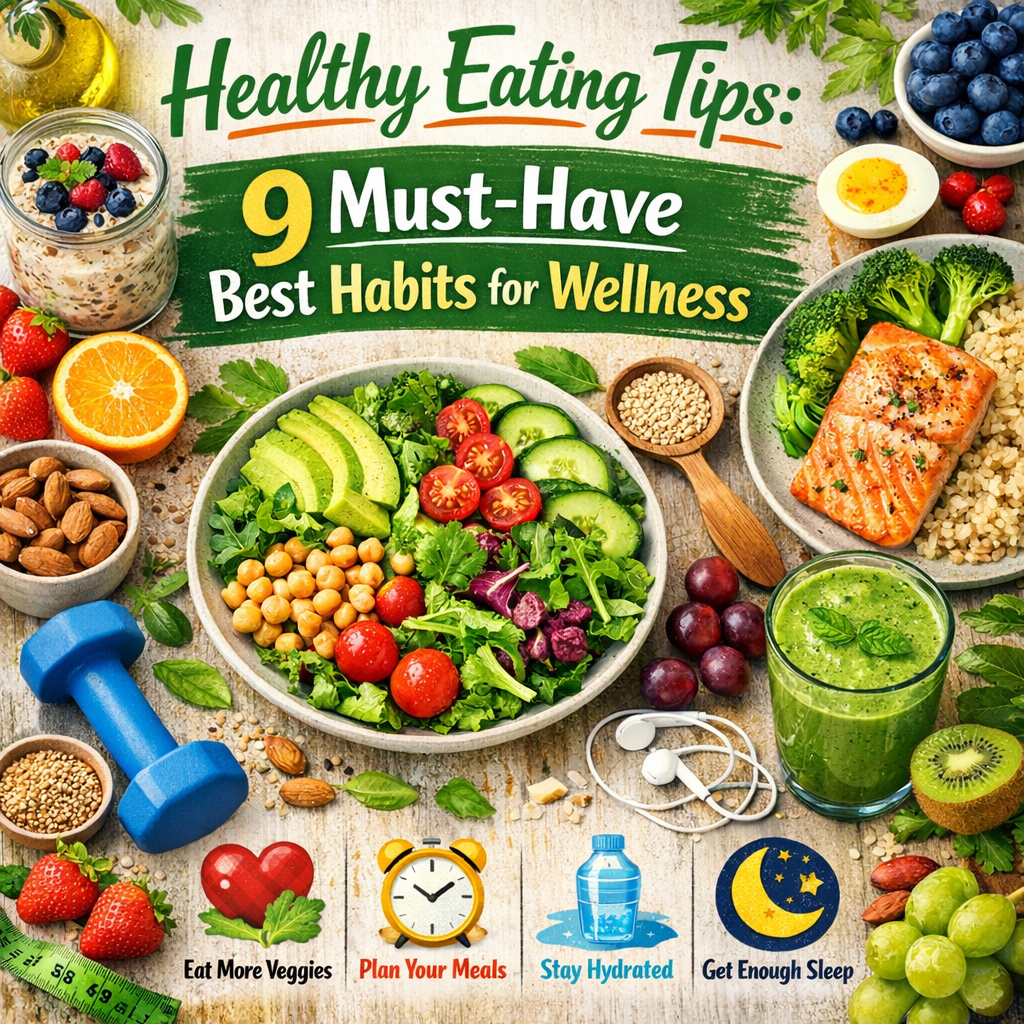
Food is more than fuel. What you eat affects your concentration, sleep, metabolism, heart health, and even your stress levels. Small daily choices add up over time, which is why practical healthy eating tips are so valuable. Instead of chasing trends, it helps to focus on habits that are sustainable and backed by common sense.
When healthy eating becomes part of your routine, it feels less like a challenge and more like self-care.
1. Start Your Day with a Balanced Breakfast
Breakfast sets the tone for the rest of the day. Skipping it can leave you feeling sluggish, overly hungry later, or more likely to reach for sugary snacks. A balanced breakfast should include a mix of protein, fiber, and healthy fats.
Good options include:
– Oatmeal with berries and nuts
– Greek yogurt with fruit and seeds
– Eggs with whole-grain toast and avocado
– A smoothie made with spinach, banana, protein, and nut butter
A nourishing breakfast helps support steady energy and better focus throughout the morning.
2. Fill Half Your Plate with Fruits and Vegetables
One of the simplest habits for better wellness is making produce a major part of your meals. Fruits and vegetables are rich in vitamins, minerals, antioxidants, and fiber. They help support digestion, immunity, and overall health.
Try to add more color to your plate by including:
– Leafy greens
– Carrots
– Bell peppers
– Tomatoes
– Berries
– Apples
– Citrus fruits
You do not need to eat the same salad every day. Roast vegetables, blend them into soups, add fruit to breakfast, or snack on raw veggies with hummus. Variety keeps meals interesting and improves nutrient intake.
3. Choose Whole Grains More Often
Refined carbohydrates can spike blood sugar quickly and may leave you hungry again soon after eating. Whole grains, on the other hand, provide more fiber and nutrients, helping you stay fuller for longer.
Consider replacing refined grains with:
– Brown rice
– Quinoa
– Oats
– Whole-wheat bread
– Whole-grain pasta
– Barley
This small change can improve digestion and help maintain stable energy levels during the day.
4. Make Protein Part of Every Meal
Protein is essential for building and repairing tissues, supporting muscle health, and helping you feel satisfied after eating. Including protein in meals and snacks can reduce unnecessary cravings and overeating.
Healthy protein sources include:
– Eggs
– Fish
– Chicken or turkey
– Beans and lentils
– Tofu and tempeh
– Cottage cheese
– Greek yogurt
– Nuts and seeds
A meal with protein, fiber, and healthy fats is often more satisfying than one built mostly around processed carbs.
5. Stay Hydrated Throughout the Day
Sometimes people mistake thirst for hunger. Drinking enough water is a key part of feeling your best, yet it is often overlooked. Hydration supports digestion, circulation, brain function, and body temperature regulation.
Simple ways to drink more water include:
– Carry a reusable bottle
– Drink a glass of water before meals
– Add lemon, mint, or cucumber for flavor
– Choose water over sugary drinks when possible
Herbal teas and water-rich foods like cucumbers, oranges, and watermelon can also help with hydration.
6. Practice Mindful Eating
Mindful eating means paying attention to what and how you eat. In a busy world, it is easy to eat too quickly, snack while distracted, or ignore fullness cues. Slowing down helps you enjoy food more and recognize when your body has had enough.
Try these mindful eating habits:
– Sit down for meals when possible
– Chew slowly
– Limit phone or TV distractions
– Notice flavor, texture, and hunger levels
– Stop eating when comfortably full, not stuffed
This habit can improve digestion and create a healthier relationship with food.
7. Limit Ultra-Processed Foods Without Being Extreme
Convenience foods are everywhere, and while they can be helpful at times, many ultra-processed products are high in added sugar, sodium, and unhealthy fats. Regularly relying on them may make it harder to meet your nutrition goals.
This does not mean you need to avoid all packaged foods. Instead, aim for balance. Read labels, compare ingredients, and choose options with simpler ingredient lists when you can.
Smart swaps include:
– Fresh fruit instead of candy
– Plain yogurt instead of sugary desserts
– Air-popped popcorn instead of fried chips
– Homemade meals more often than fast food
Progress matters more than perfection.
8. Plan Meals and Snacks Ahead
One of the most practical healthy eating tips is planning ahead. When you wait until you are extremely hungry to decide what to eat, it becomes easier to choose whatever is fastest rather than what is most nourishing.
Meal planning does not have to be complicated. Start with a few easy strategies:
– Create a basic grocery list for the week
– Prep chopped vegetables in advance
– Cook grains and proteins in batches
– Keep healthy snacks ready, such as nuts, fruit, yogurt, or boiled eggs
Having better options available makes healthy choices much easier during busy days.
9. Allow Flexibility and Build Consistency
The healthiest habits are the ones you can keep. If your eating style feels too restrictive, it may not last. Wellness is not about never enjoying dessert, pizza, or favorite comfort foods. It is about creating a solid foundation of nourishing choices most of the time.
A flexible mindset can help you:
– Avoid guilt around food
– Stay motivated long-term
– Enjoy social events without stress
– Return to healthy routines after off days
Consistency beats intensity. A balanced lifestyle is built through repeated daily habits, not short bursts of perfection.
Healthy Eating Tips for Long-Term Success
If you want your new habits to stick, start small. Pick one or two changes first, such as drinking more water or adding vegetables to lunch and dinner. Once those feel natural, add another habit. This gradual approach is more manageable and often more effective.
You can also support long-term success by:
– Keeping healthy foods visible and easy to access
– Learning a few simple meals you genuinely enjoy
– Not shopping when hungry
– Paying attention to portion sizes without obsessing
– Celebrating progress instead of focusing on setbacks
Healthy eating should feel supportive, not stressful.
Final Thoughts
Wellness is built through everyday choices, and food plays a major role in that process. By focusing on balanced meals, hydration, mindful eating, and simple planning, you can create habits that truly support your body and mind. The best routines are not the most complicated ones. They are the ones that fit into your real life and help you feel stronger, more energized, and more in control of your health.
Start where you are, keep it simple, and let each small change work in your favor over time.