- Why Good Nutrition Advice Matters
- Nutrition Advice for Building a Balanced Plate
- Prioritize Whole Foods Most of the Time
- Do Not Ignore Hydration
- Eat Mindfully, Not Automatically
- Plan Ahead to Make Healthy Choices Easier
- Be Smart About Sugar and Highly Processed Foods
- Listen to Your Body and Adjust
- Final Thoughts
Practical Nutrition Advice for Better Healthy Living
Nutrition advice is everywhere, but the most helpful guidance is often simple, practical, and easy to follow in daily life. Eating well does not require a perfect diet or extreme restrictions. Instead, it is about building habits that support energy, immunity, digestion, mood, and long-term health. When you focus on balance and consistency, healthy living becomes much more realistic and enjoyable.
Why Good Nutrition Advice Matters
The food you eat affects almost every part of your body. It fuels your brain, supports your muscles, helps regulate hormones, and plays a major role in preventing chronic conditions such as heart disease, obesity, and type 2 diabetes. Good nutrition also improves how you feel day to day. Many people notice better concentration, steadier energy, improved sleep, and fewer cravings when they begin making healthier food choices.
Rather than chasing trendy diets, it helps to focus on habits that are sustainable. Real progress comes from making smart decisions repeatedly, not from trying to be perfect for a week and then giving up.
Nutrition Advice for Building a Balanced Plate
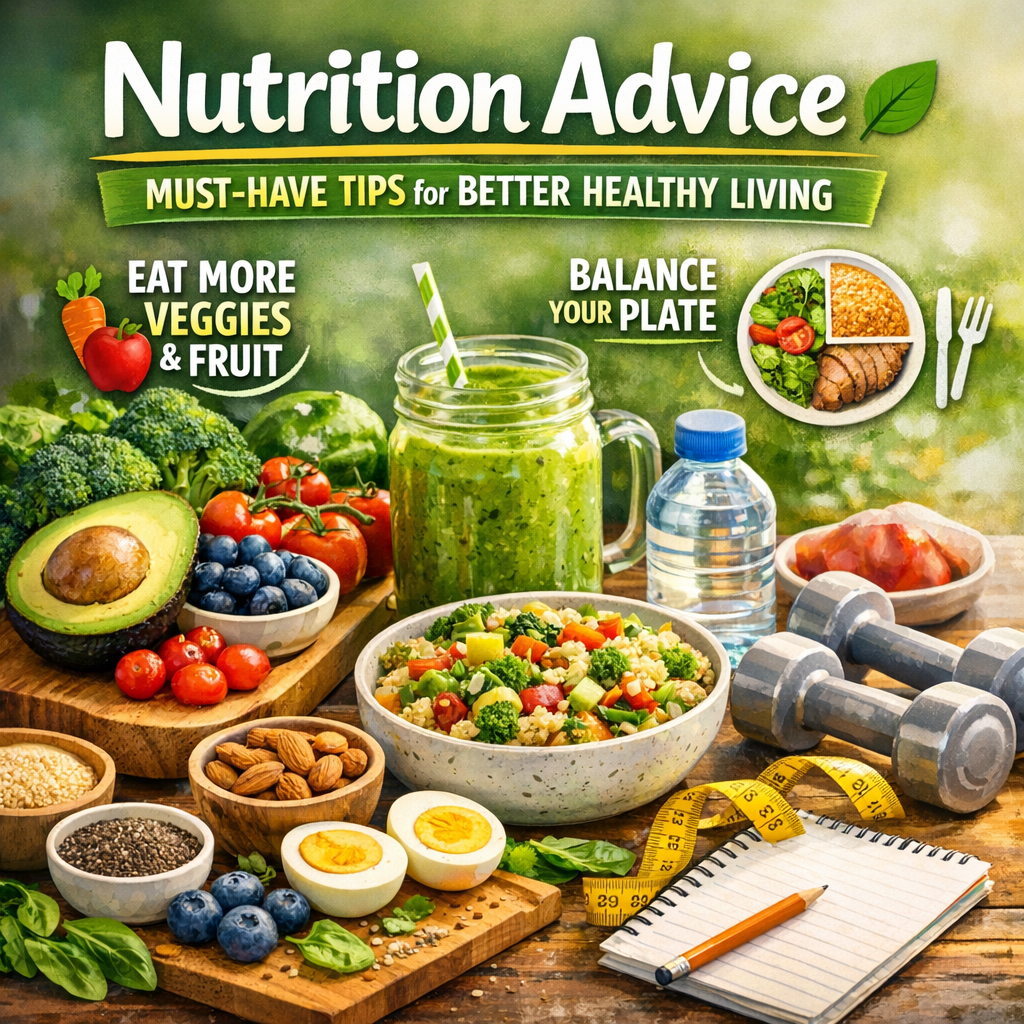
One of the easiest ways to improve your eating habits is to think about balance at each meal. A balanced plate typically includes:
– Vegetables and fruits for vitamins, minerals, and fiber
– Lean protein such as chicken, fish, eggs, beans, tofu, or Greek yogurt
– Whole grains or healthy carbohydrates like brown rice, oats, sweet potatoes, or whole grain bread
– Healthy fats from foods such as avocado, nuts, seeds, and olive oil
This combination helps you stay full longer and gives your body a wider range of nutrients. It also helps prevent overeating because meals that contain fiber, protein, and healthy fats are more satisfying than meals built around refined carbohydrates alone.
A simple visual method is to fill half your plate with vegetables, one quarter with protein, and one quarter with whole grains or starchy vegetables. This is not a strict rule, but it is a useful guide for most meals.
Prioritize Whole Foods Most of the Time
Whole foods are foods that are close to their natural state. These include fresh produce, legumes, nuts, seeds, whole grains, dairy, eggs, fish, and unprocessed meats. They tend to be richer in nutrients and lower in added sugars, excess sodium, and unhealthy fats.
That does not mean all packaged foods are bad, but reading labels can help you make better choices. Look for products with shorter ingredient lists and less added sugar. For example:
– Choose plain oatmeal instead of sugary instant varieties
– Pick yogurt with low added sugar
– Select whole grain bread with fiber and recognizable ingredients
– Compare cereal brands for sugar content
Small changes like these can improve your diet without making meals feel restrictive.
Do Not Ignore Hydration
Many people focus on food and forget that hydration is equally important. Water supports digestion, circulation, temperature control, and joint health. It can also affect energy levels and concentration.
A good daily target depends on your age, activity level, and climate, but a simple habit is to drink water regularly throughout the day instead of waiting until you feel very thirsty. Keeping a reusable water bottle nearby can make this much easier.
If plain water feels boring, try adding lemon, cucumber, mint, or berries for flavor. Herbal teas and water-rich foods like watermelon, oranges, cucumber, and soup can also contribute to hydration.
Eat Mindfully, Not Automatically
Healthy living is not only about what you eat but also how you eat. Mindful eating means paying attention to hunger, fullness, taste, and portion sizes. It helps reduce emotional eating and mindless snacking.
Try these habits:
– Sit down for meals whenever possible
– Eat without scrolling on your phone or watching television
– Chew slowly and notice flavors and textures
– Pause halfway through your meal and ask if you are still hungry
This approach can improve digestion and make meals more enjoyable. It also helps you build a healthier relationship with food.
Plan Ahead to Make Healthy Choices Easier
One of the best tips for better eating is to reduce decision fatigue. When you wait until you are extremely hungry, convenience often wins over quality. Planning even a little can make a big difference.
Helpful strategies include:
– Making a grocery list before shopping
– Preparing simple snacks like fruit, nuts, boiled eggs, or cut vegetables
– Cooking extra portions for lunch the next day
– Keeping healthy staples at home, such as canned beans, tuna, brown rice, frozen vegetables, and yogurt
Meal prep does not have to be complicated. Even washing produce, cooking a batch of grains, or marinating protein ahead of time can save effort during busy weekdays.
Be Smart About Sugar and Highly Processed Foods
Enjoying treats is part of a normal diet, but having too many sugary drinks, desserts, chips, and fast foods can crowd out more nutritious options. These foods are often high in calories and low in fiber, vitamins, and minerals.
Instead of trying to eliminate them completely, aim for moderation. You might:
– Replace soda with sparkling water
– Satisfy a sweet craving with fruit and yogurt
– Keep indulgent foods as occasional choices rather than daily habits
This balanced mindset is more sustainable than strict avoidance, which can sometimes lead to stronger cravings and overeating later.
Listen to Your Body and Adjust
There is no single eating style that works for everyone. Age, activity level, health conditions, culture, and personal preferences all matter. Some people do better with three meals a day, while others prefer smaller, more frequent meals. The goal is to notice what helps you feel energized, satisfied, and well.
If you have specific concerns such as digestive issues, food intolerances, diabetes, or high blood pressure, working with a registered dietitian can provide personalized guidance.
Final Thoughts
Healthy eating does not need to be confusing. The most effective changes are often the simplest: eat more whole foods, balance your meals, drink enough water, and stay consistent. Progress comes from everyday habits, not from temporary extremes.
When you apply practical nutrition advice in a realistic way, better healthy living becomes much easier to maintain. Start with one or two small improvements, build from there, and give yourself time. Lasting wellness is created through steady choices that fit your real life.