- Why a Smart Eating Strategy Matters
- The Foundation of the Best Healthy Eating Plan
- How to Build an Eating Strategy That Actually Works
- 1. Plan Meals in Advance
- 2. Prioritize Protein and Fiber
- 3. Eat at Regular Times
- 4. Make Healthy Choices Convenient
- Eating Strategy for Busy Lifestyles
- Common Mistakes That Can Ruin Progress
- Over-Restricting Food
- Ignoring Portion Awareness
- Drinking Calories Without Realizing It
- Expecting Immediate Perfection
- A Simple One-Day Healthy Eating Example
- Long-Term Success Comes From Simplicity
A Practical Guide to Building a Healthy Eating Plan
Eating strategy is more than choosing a salad over fries or skipping dessert once in a while. It is a practical, long-term approach to how, when, and why you eat. The best healthy eating plan is not based on restriction or trends. Instead, it helps you nourish your body, support your energy, improve your mood, and create habits you can realistically maintain.
Why a Smart Eating Strategy Matters
Many people think healthy eating means following strict rules, counting every calorie, or giving up favorite foods forever. In reality, a good plan should feel balanced, flexible, and sustainable. It should work with your schedule, budget, health goals, and lifestyle.
A thoughtful approach to eating can help you:
– Maintain steady energy throughout the day
– Support healthy weight management
– Improve digestion
– Reduce overeating and emotional eating
– Get essential vitamins, minerals, and fiber
– Build a healthier relationship with food
The key is consistency. Small, smart choices repeated daily often create better results than extreme diets that are impossible to maintain.
The Foundation of the Best Healthy Eating Plan
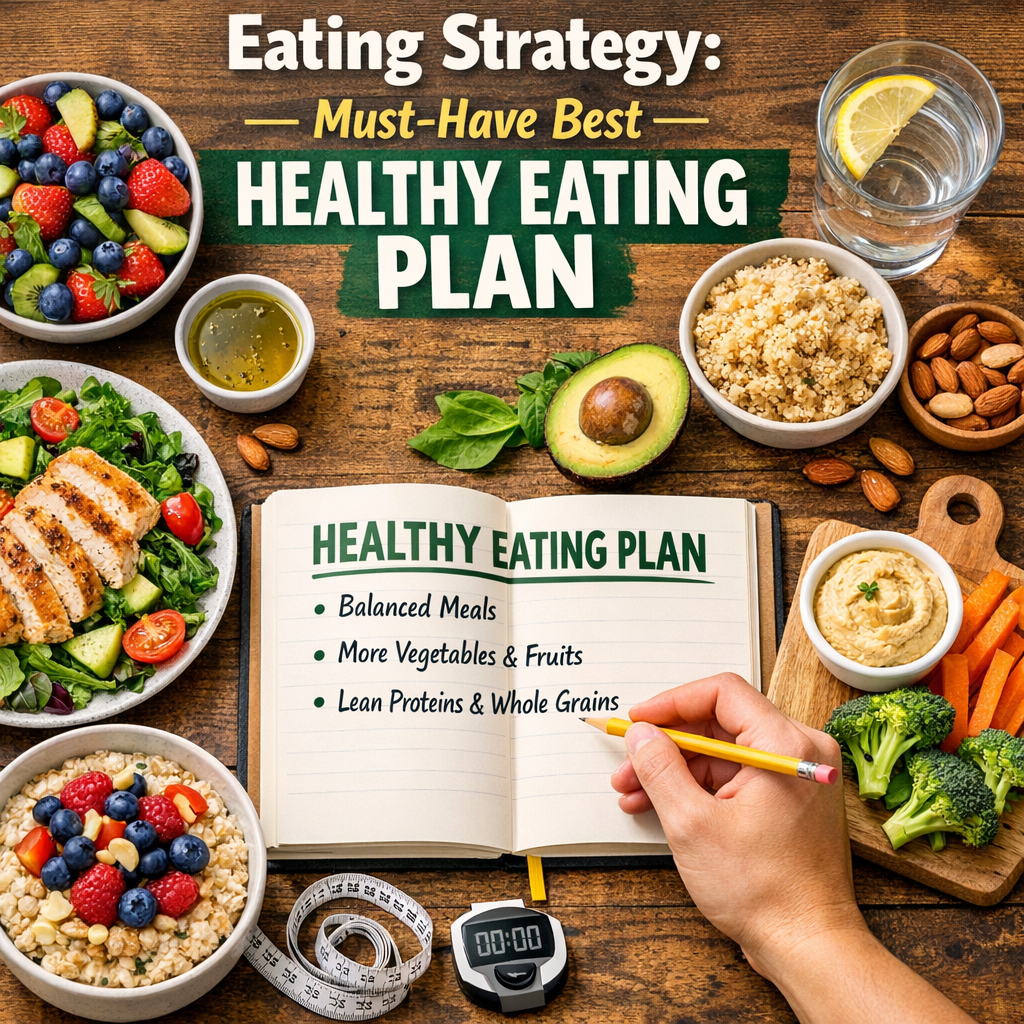
A healthy plan starts with balance. Your meals should include a mix of nutrients that help your body function at its best. Instead of focusing on what to remove, think about what to include more often.
Aim to build meals around:
– Lean protein: chicken, fish, eggs, tofu, beans, Greek yogurt
– Whole grains: oats, brown rice, quinoa, whole wheat bread
– Healthy fats: avocado, olive oil, nuts, seeds
– Fruits and vegetables: fresh, frozen, or lightly cooked
– Hydration: water, herbal tea, and low-sugar drinks
A simple visual rule can help: fill half your plate with vegetables, one quarter with protein, and one quarter with quality carbohydrates. Add a small portion of healthy fat to make meals more satisfying.
How to Build an Eating Strategy That Actually Works
An effective eating strategy should match your real life. If your plan is too complicated, too expensive, or too restrictive, it will not last. Start with habits you can repeat without feeling overwhelmed.
1. Plan Meals in Advance
Meal planning reduces stress and helps you avoid last-minute unhealthy choices. You do not need to prepare an entire week of perfect meals. Even a basic outline can make a difference.
Try planning:
– 3 to 4 easy breakfast options
– 4 to 5 lunch and dinner ideas
– Healthy snacks for busy moments
– A grocery list based on those meals
When you know what you are going to eat, you are less likely to rely on processed convenience foods.
2. Prioritize Protein and Fiber
Protein and fiber are two of the most important parts of a satisfying meal. They help keep you full longer, reduce cravings, and support stable blood sugar.
Examples of protein and fiber pairings include:
– Greek yogurt with berries and chia seeds
– Eggs with whole grain toast and spinach
– Chicken with brown rice and roasted vegetables
– Hummus with carrots and whole grain crackers
– Oatmeal topped with nuts and banana
These combinations are simple, filling, and easy to adjust based on your preferences.
3. Eat at Regular Times
Skipping meals may seem helpful when trying to eat less, but it often backfires. Long gaps between meals can lead to low energy, intense hunger, and overeating later.
Try to eat at regular times throughout the day. This does not mean you must follow a rigid schedule, but having a routine helps your body regulate hunger and fullness more effectively.
4. Make Healthy Choices Convenient
One of the best ways to improve your diet is to make good choices easier than unhealthy ones. Keep ready-to-eat nutritious foods available at home and at work.
Stock your kitchen with:
– Washed fruit
– Cut vegetables
– Hard-boiled eggs
– Plain yogurt
– Nuts and seeds
– Whole grain wraps
– Canned beans
– Frozen vegetables
Convenience matters. If healthy food is easy to grab, you are much more likely to eat it.
Eating Strategy for Busy Lifestyles
Busy schedules often lead to skipped meals, takeout, and mindless snacking. But healthy eating is possible even when life feels packed.
Here are a few practical tips:
– Prepare ingredients in batches, not just full meals
– Keep simple staples on hand for quick dinners
– Choose healthy fast options when eating out, like grilled protein and vegetables
– Carry portable snacks such as nuts, fruit, or protein bars with low added sugar
– Use leftovers creatively for lunch the next day
You do not need perfect meals every day. You need a system that helps you make better choices most of the time.
Common Mistakes That Can Ruin Progress
Even with the best intentions, some habits can make healthy eating harder than it needs to be.
Over-Restricting Food
Labeling foods as completely “good” or “bad” can create guilt and make cravings stronger. A healthy plan should allow room for enjoyment. Occasional treats can fit into a balanced lifestyle.
Ignoring Portion Awareness
Healthy food can still lead to overeating if portions are too large. Paying attention to hunger and fullness cues is just as important as choosing nutritious foods.
Drinking Calories Without Realizing It
Sugary coffees, soda, energy drinks, and even some smoothies can add a lot of extra calories. Water should be your main drink, with other beverages enjoyed in moderation.
Expecting Immediate Perfection
Healthy eating is not about being flawless. Missing a meal plan, eating dessert, or having a takeout night does not mean you failed. Progress comes from returning to your routine, not giving up.
A Simple One-Day Healthy Eating Example
If you are unsure where to start, here is a basic example of a balanced day:
Breakfast:
Oatmeal with berries, almond butter, and a boiled egg
Snack:
Apple with a handful of almonds
Lunch:
Grilled chicken salad with mixed greens, quinoa, cucumber, tomatoes, and olive oil dressing
Snack:
Greek yogurt with chia seeds
Dinner:
Baked salmon, roasted sweet potato, and steamed broccoli
Hydration:
Water throughout the day
This kind of pattern provides protein, fiber, healthy fats, and steady energy without being overly restrictive.
Long-Term Success Comes From Simplicity
The best healthy eating plan is one you can continue for months and years, not just days. Focus on habits that are simple, repeatable, and realistic. Eat more whole foods, prepare when possible, stay hydrated, and listen to your body.
A strong eating strategy is not about chasing the newest trend. It is about creating a way of eating that supports your health while still fitting into your everyday life. Start small, stay consistent, and let progress build over time. That is where real results begin.