- Why Foods for Skin Matter
- 1. Avocados
- 2. Fatty Fish
- 3. Sweet Potatoes
- 4. Berries
- 5. Nuts and Seeds
- 6. Tomatoes
- 7. Leafy Greens
- 8. Green Tea
- 9. Dark Chocolate
- How to Get the Most from Foods for Skin
- Final Thoughts
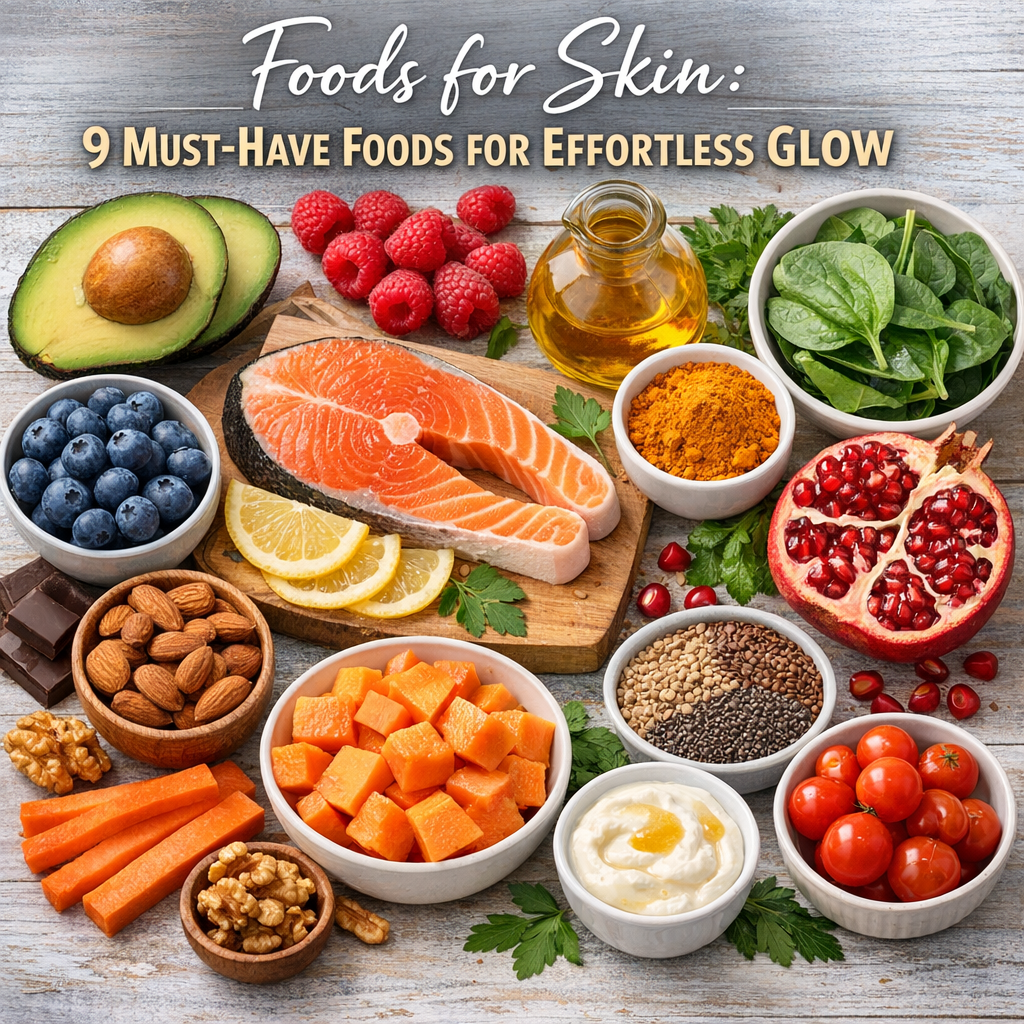
Foods for Skin: 9 Must-Have Foods for Effortless Glow
foods for skin are one of the simplest and most effective ways to support a healthy, radiant complexion from the inside out. While skincare products can help on the surface, what you eat plays a major role in hydration, elasticity, inflammation, and overall skin appearance. A nutrient-rich diet can help your skin look brighter, smoother, and more balanced without relying entirely on creams and serums.
Your skin is your body’s largest organ, and it needs a steady supply of vitamins, minerals, antioxidants, and healthy fats to function at its best. Certain foods are especially powerful because they help fight oxidative stress, support collagen production, and protect against dryness and premature aging. If you want a natural glow, adding the right ingredients to your plate is a great place to start.
Why Foods for Skin Matter
The connection between nutrition and skin health is stronger than many people realize. Everyday factors like sun exposure, pollution, stress, and lack of sleep can affect how your skin looks and feels. When your diet is low in essential nutrients, your skin may appear dull, dry, irritated, or tired.
On the other hand, nutrient-dense foods can help:
– Improve skin hydration
– Reduce inflammation
– Support collagen formation
– Protect against environmental damage
– Promote a clearer, more even complexion
The goal is not to chase perfection, but to nourish your body in a way that naturally reflects on your skin.
1. Avocados
Avocados are packed with healthy fats that help keep the skin soft, flexible, and moisturized. These fats are especially important for maintaining the skin’s natural barrier, which prevents dryness and irritation.
They are also rich in vitamin E and vitamin C. Vitamin E helps protect skin from oxidative damage, while vitamin C is essential for collagen production. Together, these nutrients support smoother, firmer-looking skin.
Easy ways to enjoy avocados:
– Add slices to toast or salads
– Blend into smoothies
– Use mashed avocado in wraps or bowls
2. Fatty Fish
Salmon, sardines, mackerel, and other fatty fish are excellent sources of omega-3 fatty acids. Omega-3s help reduce inflammation and may support calmer, more hydrated skin. They are especially beneficial for people dealing with dryness or redness.
Fatty fish also provide protein and zinc, both of which are important for skin repair and renewal. Zinc supports healing and can help maintain skin integrity.
Try including fatty fish in your meals a couple of times a week for a steady supply of skin-friendly nutrients.
3. Sweet Potatoes
Sweet potatoes are rich in beta-carotene, a plant compound that the body converts into vitamin A. This nutrient acts like a natural skin protector by helping defend against dryness and supporting healthy skin cell turnover.
Foods rich in beta-carotene may also give the skin a warm, healthy-looking tone over time. Sweet potatoes are easy to prepare and fit into many meals.
Best ways to eat them:
– Roasted as a side dish
– Mashed with herbs
– Added to grain bowls or soups
4. Berries
Blueberries, strawberries, raspberries, and blackberries are loaded with antioxidants. These compounds help fight free radicals, which can contribute to fine lines, dullness, and uneven texture.
Berries are also a good source of vitamin C, which helps the body make collagen. Since collagen supports skin firmness and elasticity, getting enough vitamin C through food can be a smart long-term strategy for skin health.
A bowl of berries makes an easy snack, breakfast topping, or dessert that feels indulgent while still being highly nutritious.
5. Nuts and Seeds
Almonds, walnuts, sunflower seeds, chia seeds, and flaxseeds all offer important nutrients for skin support. Many of them contain vitamin E, selenium, omega-3 fats, and zinc.
These nutrients can help:
– Protect the skin from oxidative stress
– Support hydration
– Reduce inflammation
– Strengthen the skin barrier
Walnuts are particularly useful because they contain a balanced mix of healthy fats. Sunflower seeds are another standout for their vitamin E content.
A small handful of nuts or seeds each day can be an easy habit with visible benefits over time.
6. Tomatoes
Tomatoes are one of the best dietary sources of lycopene, a powerful antioxidant linked to skin protection. Lycopene may help the skin better handle sun-related stress, though it should never replace sunscreen.
Tomatoes also contain vitamin C and water, making them helpful for both nourishment and hydration. Cooked tomatoes, such as those in soups or sauces, can offer even more available lycopene than raw ones.
Adding tomatoes to salads, pasta dishes, or homemade sauces is a simple way to boost your intake.
7. Leafy Greens
Spinach, kale, arugula, and Swiss chard are loaded with skin-supportive nutrients. They contain vitamins A, C, E, and K, along with antioxidants and minerals that help the skin recover from daily stress.
Leafy greens are especially useful for promoting a fresh, healthy appearance because they nourish the body without adding excess sugar or processed ingredients. Their anti-inflammatory properties can also support a more balanced complexion.
Ways to eat more greens:
– Toss into smoothies
– Add to omelets
– Build salads with different varieties
– Stir into soups and pasta dishes
8. Green Tea
While technically a drink, green tea deserves a spot on this list because of its powerful skin benefits. It contains polyphenols, especially catechins, which help protect the skin from environmental damage and support a more even, calm appearance.
Green tea may also help reduce inflammation and improve skin resilience over time. Drinking it regularly can be a simple addition to your routine, especially if you are trying to cut back on sugary beverages.
For the best results, enjoy it unsweetened or lightly flavored with lemon.
9. Dark Chocolate
Good news for chocolate lovers: dark chocolate can be beneficial for skin when eaten in moderation. The key is choosing dark chocolate with a high cocoa content and low added sugar.
Cocoa contains antioxidants called flavanols, which may improve skin texture, support circulation, and help maintain hydration. Better blood flow means your skin cells receive more oxygen and nutrients, which contributes to a naturally healthier look.
A small square or two of quality dark chocolate can be a satisfying treat with surprising perks.
How to Get the Most from Foods for Skin
Eating these foods once in a while will help, but consistency matters most. A glowing complexion usually comes from long-term habits rather than quick fixes. To get the best results, pair skin-friendly foods with a healthy lifestyle.
Keep these basics in mind:
– Drink enough water throughout the day
– Limit highly processed foods and excess sugar
– Get enough sleep
– Manage stress where possible
– Wear sunscreen daily
A balanced approach works better than focusing on one “miracle” ingredient. The more varied your diet, the more nutrients your skin can draw from.
Final Thoughts
Healthy skin often starts with everyday choices, and your meals are a big part of that picture. By adding nutrient-rich options like avocados, fatty fish, sweet potatoes, berries, nuts, tomatoes, leafy greens, green tea, and dark chocolate, you give your skin valuable support from within.
Instead of chasing complicated solutions, start with your plate. Small, consistent changes can make a real difference, helping your skin look naturally fresh, nourished, and effortlessly radiant.