- Why Energy Levels Depend on Your Diet
- Best Foods for Energy and Endurance
- 1. Oats
- 2. Eggs
- 3. Bananas
- 4. Nuts and Seeds
- 5. Greek Yogurt
- 6. Sweet Potatoes
- 7. Fatty Fish
- 8. Leafy Greens
- 9. Brown Rice and Quinoa
- 10. Berries
- Foods for Energy: What a Balanced Plate Looks Like
- Energy-Draining Foods to Limit
- Smart Eating Habits for Lasting Vitality
- Eat Regularly
- Stay Hydrated
- Pair Carbs with Protein or Fat
- Don’t Ignore Sleep and Movement
- Final Thoughts
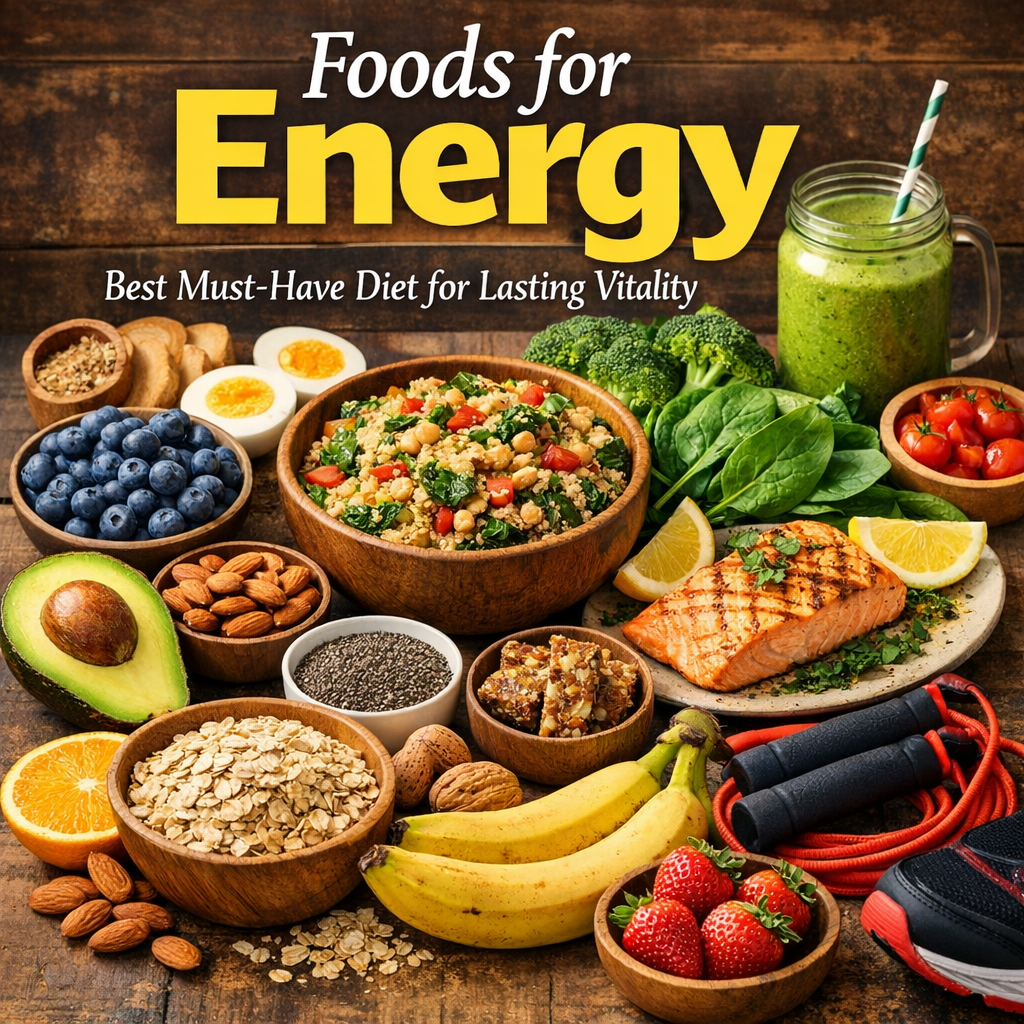
Foods for Energy: Best Must-Have Diet for Lasting Vitality
Foods for energy are not just about quick fixes like sugary snacks or another cup of coffee. The right diet can help you stay alert, productive, and physically strong throughout the day without the highs and crashes that come from processed foods. When you choose nutrient-dense meals, your body gets a steady supply of fuel that supports brain function, muscle performance, and overall well-being. Lasting vitality starts with what you put on your plate every day.
Why Energy Levels Depend on Your Diet
Your body turns food into energy, but not all foods work the same way. Some provide a slow, steady release of fuel, while others spike blood sugar and leave you feeling drained soon after. A balanced diet helps maintain consistent energy by supporting healthy digestion, stable blood sugar, and proper hydration.
The most effective approach includes:
– Complex carbohydrates for sustained fuel
– Protein for muscle repair and satiety
– Healthy fats for long-lasting energy
– Vitamins and minerals that support metabolism
– Plenty of water to prevent fatigue caused by dehydration
When your diet lacks these essentials, tiredness, brain fog, and low motivation can become part of your daily routine.
Best Foods for Energy and Endurance
If you want stamina that lasts beyond the morning, focus on whole foods that deliver both calories and nutrients. Here are some of the best options to include regularly.
1. Oats
Oats are one of the best breakfast choices for steady energy. They are rich in complex carbohydrates and fiber, which slow digestion and help prevent sudden drops in blood sugar. Oats also contain B vitamins, iron, and magnesium, all of which play a role in energy production.
Try them as:
– Warm oatmeal with fruit and nuts
– Overnight oats with yogurt
– Oat-based smoothies
2. Eggs
Eggs are packed with high-quality protein and essential nutrients like choline, iron, and vitamin B12. Protein helps keep you full longer, while B12 supports the body’s ability to convert food into usable energy.
They make an excellent addition to breakfast or lunch because they are satisfying without making you feel sluggish.
3. Bananas
Bananas are a natural source of carbohydrates, potassium, and vitamin B6. They are especially useful as a pre-workout snack or a mid-afternoon energy booster. Unlike processed sweets, bananas provide natural sugars along with fiber, helping energy feel more stable.
4. Nuts and Seeds
Almonds, walnuts, chia seeds, flaxseeds, and pumpkin seeds are small foods with big nutritional benefits. They contain healthy fats, protein, and minerals like magnesium, which is important for muscle function and energy metabolism.
A small handful can keep hunger in check and provide lasting fuel between meals.
5. Greek Yogurt
Greek yogurt offers a strong mix of protein and carbohydrates. It is also a good source of calcium and probiotics, which may support gut health. Since digestive health can influence how well your body absorbs nutrients, yogurt can indirectly help support better energy levels too.
For a balanced snack, pair it with berries or granola.
6. Sweet Potatoes
Sweet potatoes are rich in complex carbs, fiber, and antioxidants. They also provide vitamin A, manganese, and potassium. Because they digest more slowly than refined starches, they are a reliable source of sustained energy.
They work well baked, roasted, or mashed alongside lean proteins and vegetables.
7. Fatty Fish
Salmon, sardines, and mackerel provide protein plus omega-3 fatty acids, which support brain health and may reduce inflammation. When your body is less stressed by inflammation, you may feel better overall and experience more consistent energy.
Fatty fish also contain vitamin D and B vitamins, adding even more benefits to your daily diet.
8. Leafy Greens
Spinach, kale, and Swiss chard are loaded with iron, folate, vitamin C, and magnesium. Iron is especially important because low iron levels can lead to fatigue and weakness. Adding leafy greens to meals is one of the easiest ways to boost nutrient intake without adding heavy calories.
9. Brown Rice and Quinoa
Whole grains such as brown rice and quinoa provide complex carbohydrates that release energy gradually. Quinoa also has the advantage of being a complete protein, meaning it contains all nine essential amino acids.
These grains are ideal for lunch or dinner bowls that need to keep you full and focused for hours.
10. Berries
Blueberries, strawberries, and raspberries are rich in antioxidants and natural carbohydrates. They are lighter than many snacks but still provide a refreshing lift. Their fiber content also helps slow sugar absorption.
Foods for Energy: What a Balanced Plate Looks Like
Building meals for vitality does not have to be complicated. A useful rule is to include a source of each major nutrient group at most meals.
A balanced energy-supporting plate often includes:
– Complex carbs: oats, brown rice, quinoa, sweet potatoes
– Protein: eggs, fish, chicken, beans, Greek yogurt
– Healthy fats: avocado, nuts, seeds, olive oil
– Colorful produce: berries, leafy greens, citrus, peppers
For example:
– Breakfast: oatmeal with banana, chia seeds, and Greek yogurt
– Lunch: quinoa bowl with spinach, grilled chicken, avocado, and roasted vegetables
– Snack: apple with almond butter
– Dinner: salmon with brown rice and steamed broccoli
This combination helps fuel both your body and your mind throughout the day.
Energy-Draining Foods to Limit
Some foods may seem energizing in the moment but often lead to a crash later. If you regularly feel tired, it may help to reduce:
– Sugary drinks
– Candy and pastries
– Highly processed snack foods
– Refined white bread and cereals
– Fast food high in unhealthy fats
– Excess caffeine without real meals
These foods can create quick spikes in blood sugar, followed by dips that leave you feeling more exhausted than before.
Smart Eating Habits for Lasting Vitality
Choosing the right foods matters, but your eating habits also affect energy. Small daily changes can make a noticeable difference.
Eat Regularly
Skipping meals often leads to low blood sugar, poor concentration, and overeating later. Try to eat balanced meals at regular intervals.
Stay Hydrated
Even mild dehydration can make you feel tired, irritable, and unfocused. Water is essential for transporting nutrients and supporting nearly every body function.
Pair Carbs with Protein or Fat
Instead of eating carbohydrates alone, combine them with protein or healthy fat to slow digestion and improve energy stability. For example, pair fruit with nuts or toast with eggs.
Don’t Ignore Sleep and Movement
Even the best diet works better when supported by quality sleep and regular exercise. Food is one part of the energy equation, but lifestyle habits complete the picture.
Final Thoughts
A strong, steady energy level does not come from one miracle ingredient. It comes from consistently choosing whole, nutrient-rich foods that nourish your body over time. Oats, eggs, bananas, nuts, yogurt, sweet potatoes, fish, leafy greens, whole grains, and berries all deserve a place in a diet designed for lasting vitality.
If you want to feel more energized naturally, begin with simple upgrades to your meals. Focus on balance, eat regularly, stay hydrated, and choose foods that work with your body rather than against it. Over time, these everyday choices can help you feel more focused, active, and ready for whatever the day brings.